
Tasteless is an "act of resistance" in Cuba
Created amid embargoes, blackouts and countless other problems. Despite everything

Try to imagine having to make a video game amid frequent blackouts, fuel shortages and everyday hardship. Now, after that, try to imagine something else: wanting to make a second game.
That is what Josuhe Pagliery and the whole team at Empty Head Games have chosen to do.
They are developing Tasteless, a 3D low-poly horror game. It is the second chapter in the “less” trilogy, following Saviorless, which was instead a 2D game. It launched in 2024 and drew attention precisely because of the extraordinarily complicated context it had to face simply in order to exist.
With Tasteless, things have not become easier. Quite the opposite. And that is exactly why, in an email interview, Pagliery describes this game as “an act of resistance”.
What life in Cuba looks like today
To really understand what it means to develop a video game in Cuba today, however, we need to look beyond Empty Head Games.
In recent months, the situation on the island has worsened even further. Blackouts have become part of everyday life. Outside Havana, they can last as long as twenty consecutive hours and often arrive without any warning. Electricity returns whenever it happens to return, sometimes in the middle of the night, forcing people to leave lights and fans switched on just so they can notice that power is finally back and use those few hours to cook, charge phones and computers or simply do ordinary things.
Cuba depends on imported oil and the new restrictions imposed by the United States have made an already fragile situation even worse. Some of the world’s largest maritime shipping companies have suspended routes to the island for fear of running into US sanctions, further reducing the arrival of goods and materials.
The consequences are visible everywhere: Hospitals are short of medicines, many people are unable to treat chronic illnesses and even waste collection has become irregular because of fuel shortages. With the arrival of the hot and humid season, health risks are also increasing.
Within this context, talking about game development almost sounds absurd. And that is probably the point. Tasteless is not being made in a difficult situation “for the indie market”. It is being made in a country where, at times, even having electricity for a few hours in a row becomes uncertain.
So when Pagliery calls Tasteless “an act of resistance”, he is not using a rhetorical formula. He is literally describing the way the game is being made.
Between solar panels and sheer willpower
In other words, Tasteless is not just a new independent project. It is also an attempt to prove, once again, that making video games in Cuba is not impossible. Or at least, that it should not be so.
“For us, the true success of Saviorless was its historical precedent: proving that a game born in total isolation could not only compete but shine on equal terms with any other global production, regardless of its origin,” he says. And when I ask him how many copies Saviorless sold, he prefers to focus on something else: Saviorless, quite simply, “wasn’t supposed to exist”. And yet it came to PlayStation 5 and Nintendo Switch, receiving nominations at IndieCade and the Quirino Awards.
“However, our path has always been a solitary one”, Pagliery tells me when I ask him if Saviorless helped putting Cuba on the map of the gaming world. “We prefer to stay away from ‘scenes’ or movements to focus entirely on the work itself. I see myself as an author committed to individuality and the quality of the final product, rather than a social representative. My priority is to maintain a professional standard and deliver my vision, especially when the local context makes it so difficult”.
But that visibility did not turn Empty Head Games into a stable studio. “In the radical indie world, ‘stability’ is a day to day struggle,” he explains. “We are still managing every resource with extreme care to keep the development of Tasteless going.”
A small group of people is working on Tasteless, with a core team of just two developers, where “everyone does the work of three people”. Alongside Pagliery, who serves as 2D artist, writer and art director, the team includes Miguel Nicolás as lead programmer, Angel Menéndez as 3D artist, and German Carrasco on music and sound effects. David Darias, who contributed to Saviorless, remains involved as a technical advisor, although he is not directly part of development this time.
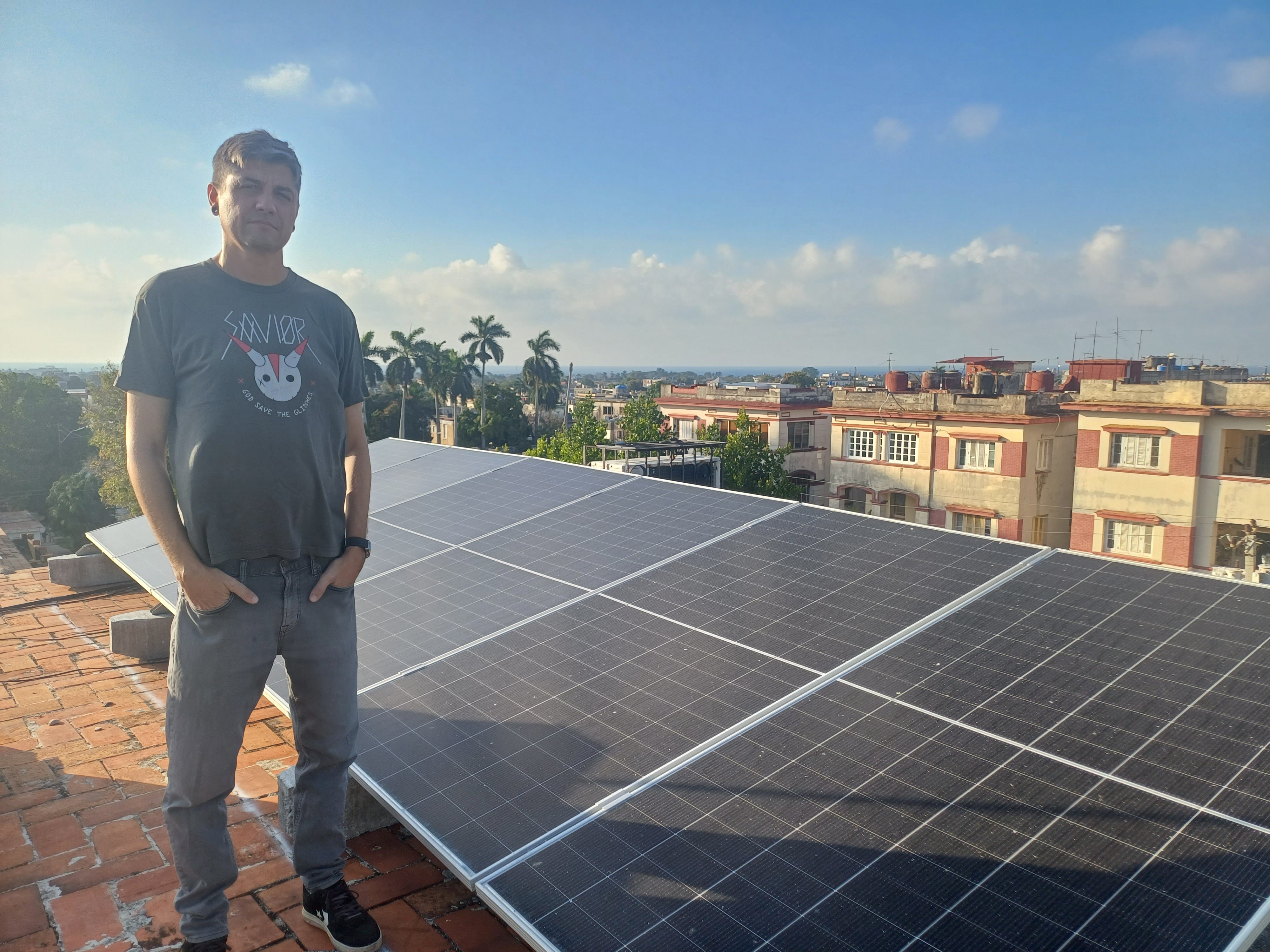
To work around the problem of frequent blackouts, at one point the team had to invest “several thousand dollars” in solar panels just to keep working. “It was a mandatory investment; without them, our work would literally be in the dark,” Pagliery says.
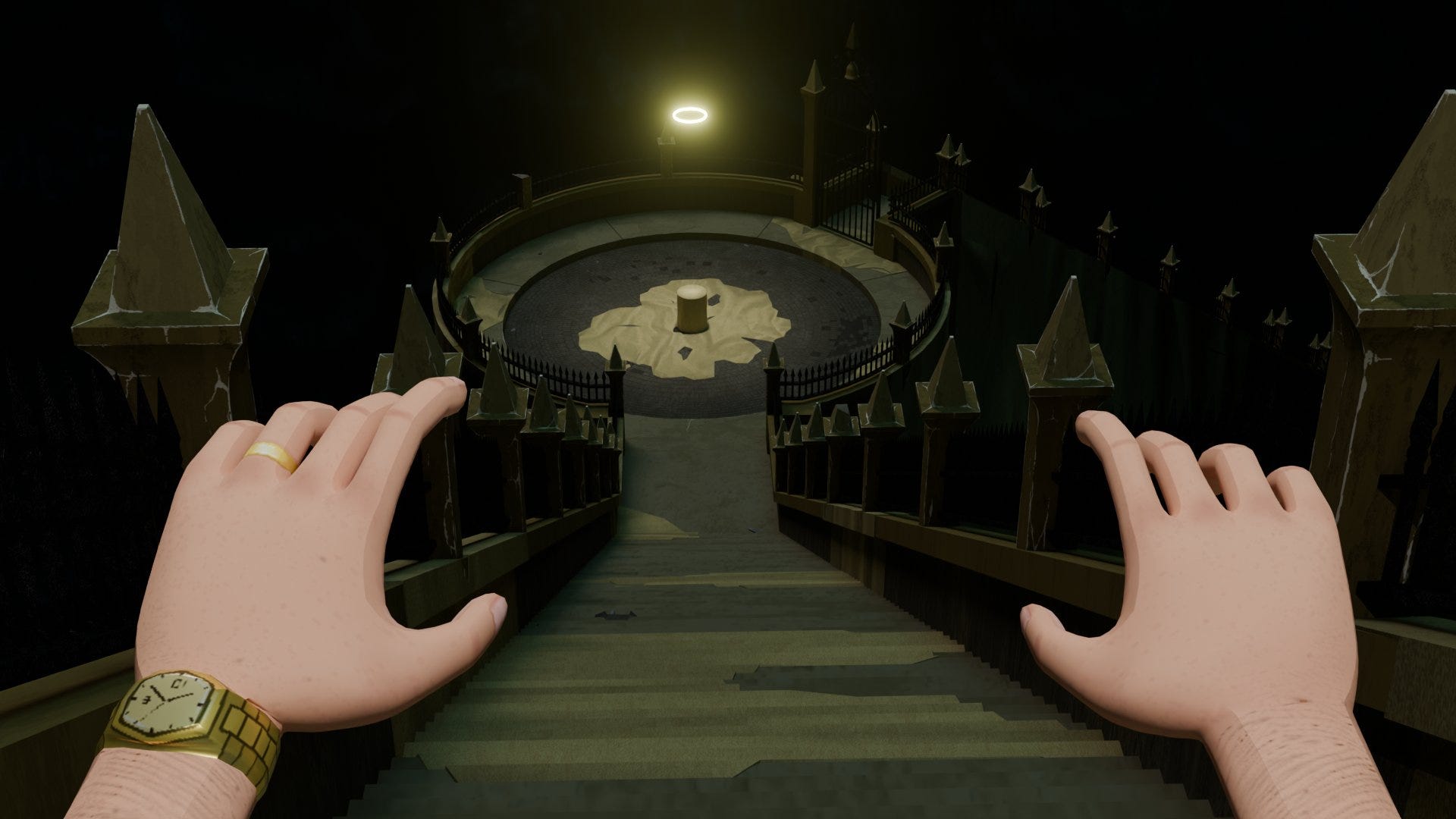
The shift from the 2D of Saviorless to the 3D of Tasteless is described as “the natural language to express this fragmented reality”. As for any additional costs linked to that transition, Pagliery says: “We see it as an aesthetic shift, not a financial calculation. For us, the value of the project is measured by the artistic vision and the 3D low-poly aesthetic was the right one for this game in particular.”
Tasteless is set in 1996, during the “Special Period”, the devastating economic crisis that hit Cuba after the collapse of the Soviet Union. Its story follows a father who loses his son and is given the chance to bring him back to life “at a terrible cost”. “It’s a game about the death of the future, mirroring the country’s own existencial crisis,” Pagliery explains. “This title continues the trilogy of ‘less’ that began with Saviorless; but while the first game was a foundational myth, Tasteless represents the disastrous implementation of that myth into a broken reality.”
This is what the video game industry looks like today: a deeply complex environment, marked by constant layoffs, cuts, lack of funding and rising costs, where people working independently almost have to compete over who has suffered the most just to be able to say, “Look at the conditions we worked under, and yet here we are.”
But objectively, making video games in a context like Cuba’s - where everything seems to say “no, you cannot do this” - adds another layer of difficulty.
It is not only about finding money or a publisher. It is about being able to turn the computers on.
And yet Empty Head Games keeps moving forward. It is not considering a crowdfunding campaign as a “plan B” and, at least for now, it has not announced any agreement with a publisher. Pagliery, however, says he trusts the path the team has taken, also thanks to the experience gained with Saviorless.
What should surprise us is that Tasteless is not being born as a desperate project. It is being born as something the team still considers possible. Despite everything.